
Examination Process
Examination Process for Forensic at Brilliant Forensic Pvt Ltd
The examination process for forensic programs at Brilliant Forensic Pvt Ltd is designed to evaluate both theoretical knowledge and practical skills of students. As forensic science is a highly technical and investigative field, the assessment structure ensures that candidates are well-prepared for real-world challenges in crime investigation, laboratory analysis, and legal procedures.This comprehensive evaluation system helps students build strong analytical abilities, critical thinking skills, and hands-on expertise, which are essential for a successful career in forensic science.
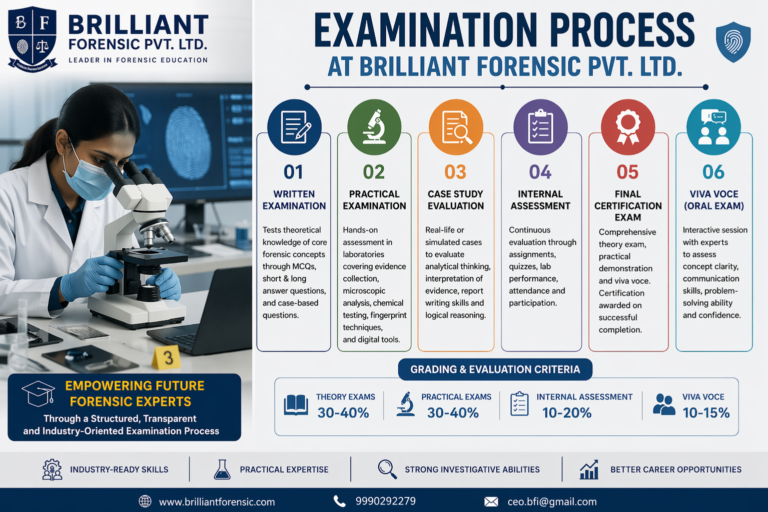
The examination process in forensic at Brilliant Forensic Pvt Ltd is carefully designed to evaluate students through a structured and industry-oriented approach. This process ensures that learners develop strong theoretical knowledge along with practical expertise required in the field of forensic science.
The system follows a multi-layered evaluation model, which includes:
- Written examinations
- Practical assessments
- Case study analysis
- Internal evaluations
- Final certification exams
This comprehensive assessment framework ensures that students are tested on core forensic concepts, real-world application, analytical thinking, and problem-solving skills, making them fully prepared for professional roles in forensic science.
1. Written Examination (Theory Assessment in Forensic)
The written examination process is one of the most important components of the forensic evaluation process at Brilliant Forensic Pvt Ltd. It is specifically designed to assess a student’s theoretical knowledge, conceptual clarity, and analytical understanding of core forensic science subjects.
This stage builds the academic foundation required for applying forensic techniques in real-world investigations, making it a critical step in the overall examination system.
Key Topics Covered in the Written Examination
The written exam includes a wide range of subjects to ensure a comprehensive understanding of forensic science, such as:
- Crime Scene Investigation (CSI): Principles of securing, documenting, and analyzing crime scenes
- Forensic Biology and DNA Analysis: Study of biological evidence, DNA profiling, and identification techniques
- Forensic Toxicology: Analysis of drugs, poisons, and chemicals in biological samples
- Cyber Forensics: Investigation of digital crimes, data recovery, and cyber evidence analysis
- Fingerprint and Impression Analysis: Identification and comparison of fingerprints, footprints, and other impressions
These subjects are essential for developing multi-disciplinary expertise in forensic science.
Key Features of the Written Examination
The written examination is structured to test different levels of understanding through a variety of question formats:
- Multiple Choice Questions (MCQs):
Evaluate basic knowledge, accuracy, and quick decision-making skills - Short-Answer Questions:
Test conceptual clarity and the ability to explain key forensic concepts concisely - Long Descriptive Answers:
Assess in-depth understanding, critical thinking, and structured explanation of forensic topics - Case-Based Problem-Solving Questions:
Present real-life or hypothetical scenarios where students must apply forensic principles to analyze and solve problems
Objective and Importance of the Written Exam
The primary objective of the written examination is to evaluate how effectively students can:
- Understand and retain forensic science concepts
- Interpret scientific data and evidence
- Apply theoretical knowledge to practical situations
- Analyze complex forensic cases logically
This stage plays a crucial role in developing analytical thinking, problem-solving ability, and decision-making skills, which are essential for careers in forensic laboratories, law enforcement agencies, and legal systems.
Why the Written Examination Matters
A strong performance in the written examination process demonstrates that a student has:
- A solid academic foundation in forensic science
- The ability to think critically and scientifically
- Readiness to handle advanced practical training
- Capability to work on real-world forensic investigations
Overall, the written examination serves as the backbone of the forensic evaluation process, ensuring that students are well-prepared for both practical assessments and professional challenges in the field of forensic science.
2. Practical Examination (Hands-on Forensic Skills)
In forensic science, practical knowledge is just as important as theoretical understanding. The practical examination process at Brilliant Forensic Pvt Ltd is designed to provide students with real-world exposure and hands-on experience in forensic techniques.
This stage focuses on developing technical skills, accuracy, and confidence, ensuring that students are fully prepared to handle real forensic cases in professional environments.
Practical Areas Covered in Forensic Examination
The practical assessments are conducted in well-equipped laboratories where students perform various forensic procedures in examination process, including:
- Evidence Collection and Preservation Techniques:
Learning proper methods to collect, label, package, and preserve physical and biological evidence without contamination - Microscopic and Biological Analysis:
Examination of samples such as hair, fibers, tissues, and bodily fluids using advanced microscopes and forensic tools - Chemical and Toxicological Testing:
Identifying drugs, poisons, and chemical substances in samples through laboratory-based testing methods - Fingerprint Lifting and Identification:
Techniques for detecting, lifting, and analyzing fingerprints using powders, chemicals, and digital systems - Use of Digital Forensic Tools and Software:
Hands-on training in recovering, analyzing, and interpreting digital evidence from computers, mobile devices, and networks
Key Objectives of Practical Examination
The practical examination process aims to:
- Develop hands-on forensic skills
- Improve accuracy and attention to detail
- Enhance technical and laboratory proficiency
- Build confidence in handling forensic equipment and tools
- Train students to follow standard forensic protocols and procedures
Importance of Practical Exams in Forensic Science
The practical examination process at Brilliant Forensic Pvt Ltd plays a crucial role in transforming theoretical knowledge into real-world application.
It ensures that students can:
- Perform forensic procedures with precision and reliability
- Handle and analyze evidence in a professional manner
- Work efficiently in forensic laboratories and investigation units
- Maintain accuracy required for legal and courtroom standards
This stage is essential for preparing students for careers in forensic laboratories, crime investigation agencies, cyber forensic units, and legal systems.
Why Practical Training Matters
Strong practical skills are the foundation of a successful career in forensic science. Through intensive practical examination process , students gain:
- Real-time experience in forensic analysis
- Problem-solving abilities in complex scenarios
- Confidence to work on actual cases
- Industry-ready skills demanded by employers
3. Case Study Evaluation in Forensic Training
Case study analysis is a vital and advanced component of the forensic examination process at Brilliant Forensic Pvt Ltd. This stage is designed to bridge the gap between theoretical knowledge and practical application by exposing students to real-life or simulated forensic cases.
Through this method, students are trained to think like professional forensic experts, enabling them to analyze evidence, reconstruct crime scenarios, and draw logical conclusions based on scientific findings.
What is Included in Case Study Analysis?
During the case study evaluation examination process students are presented with detailed scenarios that may involve:
- Crime scene descriptions and evidence samples
- Biological, chemical, or digital forensic data
- Witness statements and investigation reports
- Hypothetical or real criminal cases
Students are required to carefully examine the information, identify relevant evidence, and apply forensic principles to solve the case systematically.
Key Skills Evaluated in Case Study Analysis
This stage focuses on assessing a wide range of professional and analytical skills, including:
- Analytical and Critical Thinking:
Ability to break down complex information, identify patterns, and evaluate evidence logically - Interpretation of Forensic Evidence:
Understanding and analyzing physical, biological, and digital evidence to draw accurate conclusions - Logical Reasoning and Problem-Solving:
Applying scientific reasoning to connect facts and solve forensic cases step-by-step - Professional Report Writing:
Preparing clear, structured, and legally acceptable forensic reports based on findings
Objective of Case Study Evaluation
The primary objective of case study analysis is to:
- Develop investigative thinking and decision-making skills
- Train students to handle real-world forensic challenges
- Improve the ability to interpret complex data and evidence
- Enhance report writing and documentation skills required in legal systems
Importance in Real-World Forensic Careers
The case study examination process at Brilliant Forensic Pvt Ltd plays a crucial role in preparing students for real forensic work environments.
It enables students to:
- Handle complex criminal investigations with confidence
- Present findings clearly in courtroom and legal proceedings
- Work efficiently in forensic labs, law enforcement agencies, and investigative units
- Make accurate, evidence-based decisions under pressure
Why Case Study Analysis Matters
Case study-based learning ensures that students are not just memorizing concepts but are actively applying them in realistic scenarios. This helps in building:
- Strong investigative mindset
- Practical problem-solving abilities
- Confidence in handling real cases
- Professional communication skills.
4. Internal Assessment and Continuous Evaluation in Forensic Training
The internal assessment and continuous evaluation system at Brilliant Forensic Pvt Ltd plays a crucial role in tracking and improving student performance throughout the forensic training program. Unlike one-time examinations, this system focuses on consistent evaluation, skill development, and academic progress over the entire course duration.
This structured approach ensures that students remain actively engaged in learning while continuously enhancing their theoretical knowledge, practical skills, and analytical abilities.
Components of Internal Assessment
The internal assessment process is designed to evaluate students through multiple parameters, providing a well-rounded understanding of their capabilities:
- Assignments and Projects:
Students are given topic-based assignments and practical projects to strengthen their understanding of forensic concepts and real-world applications - Regular Quiz Tests:
Frequent quizzes help in assessing knowledge retention, improving speed and accuracy, and reinforcing important forensic topics - Laboratory Performance:
Continuous monitoring of student performance in practical sessions, including their ability to handle equipment, follow procedures, and maintain accuracy - Attendance and Class Participation:
Active participation in lectures, discussions, and practical sessions ensures better learning outcomes and reflects student commitment
Objectives of Continuous Evaluation
The internal assessment system aims to:
- Promote consistent learning habits
- Encourage active participation and engagement
- Monitor academic and practical progress regularly
- Provide timely feedback for improvement
- Strengthen preparation for final examinations
Key Benefits of Internal Assessment
The continuous examination process at Brilliant Forensic Pvt Ltd offers several advantages that contribute to overall student success:
- Encourages Continuous Learning:
Students stay regularly involved in their studies instead of relying only on final exams - Identifies Strengths and Improvement Areas:
Helps students and instructors understand performance gaps and work on them effectively - Enhances Overall Academic Performance:
Regular evaluation leads to better understanding and higher final scores - Builds Confidence and Discipline:
Consistent practice improves confidence and develops a professional approach to learning - Prepares Students for Final Certification Exams:
Continuous assessments ensure that students are well-prepared and exam-ready
Importance in Forensic Education
Internal assessment is especially important in forensic science, where both accuracy and consistency are critical. This evaluation system helps students in examination process develop:
- Strong conceptual clarity
- Practical efficiency in lab work
- Analytical and problem-solving skills
- Time management and discipline
5. Final Certification Examination in Forensic
The final certification examination process at Brilliant Forensic Pvt Ltd is conducted at the end of the training program and serves as the ultimate assessment of a student’s knowledge, practical skills, and professional competency in forensic science.
This examination is a crucial milestone, as it determines whether a candidate is fully prepared to enter the forensic field with the required expertise and confidence. Successfully clearing this stage leads to official certification, which validates the student’s capabilities and enhances career opportunities in forensic science.
Structure of the Final Certification Examination
The final examination is designed as a comprehensive evaluation system, covering all major aspects of forensic training:
1. Comprehensive Theory Examination
The theory exam assesses the student’s in-depth understanding of forensic science concepts studied throughout the course.
Key Focus Areas:
- Crime scene investigation principles
- Forensic biology and DNA analysis
- Toxicology and chemical analysis
- Cyber forensics and digital evidence
- Fingerprint and impression analysis
Objective:
To evaluate the student’s ability to understand, interpret, and apply theoretical knowledge in solving forensic problems and case scenarios.
2. Practical Demonstration of Skills
The practical examination process tests the student’s hands-on abilities and technical proficiency in performing forensic procedures.
What is Assessed:
- Evidence handling and preservation techniques
- Laboratory analysis and testing methods
- Use of forensic tools and equipment
- Accuracy, precision, and adherence to protocols
Objective:
To ensure that students can execute real forensic tasks efficiently and professionally, meeting industry and legal standards.
3. Viva Voce (Oral Examination)
The viva voce is an interactive assessment where students are evaluated by experts through direct questioning.
Key Evaluation Areas:
- Conceptual clarity and subject knowledge
- Communication and presentation skills
- Problem-solving and analytical thinking
- Confidence in explaining forensic findings
Objective:
To assess how effectively students can articulate their knowledge, justify their analysis, and respond to professional queries, which is essential in real-world forensic roles and courtroom settings.
Importance of the Final Certification Examination
The final examination process at Brilliant Forensic Pvt Ltd plays a vital role in:
- Validating a student’s overall forensic knowledge and skills
- Ensuring readiness for real-world forensic challenges
- Enhancing credibility and employability in the job market
- Preparing students for roles in forensic laboratories, law enforcement, and legal systems
Certification and Career Value
Students must successfully clear all components—theory, practical, and viva—to receive certification from Brilliant Forensic Pvt Ltd.
This certification acts as:
- Proof of professional competence in forensic science
- A valuable credential for job opportunities in government and private sectors
- A foundation for advanced studies and specialization in forensic fields
6. Viva Voce (Oral Examination in Forensic)
The viva voce (oral examination process) is a crucial and interactive component of the forensic examination process at Brilliant Forensic Pvt Ltd. This stage involves direct interaction between students and subject-matter experts, where candidates are assessed on their knowledge, communication skills, and ability to think critically under pressure.
Unlike written or practical exams, the viva focuses on how effectively a student can explain forensic concepts, justify their analysis, and present findings in a clear and professional manner—skills that are essential in real-world forensic careers.
Key Focus Areas in Viva Voce
During the viva examination, students are evaluated across multiple important parameters:
- Conceptual Clarity:
Students must demonstrate a strong understanding of forensic science concepts and their applications across various domains such as crime scene investigation, toxicology, and digital forensics - Communication and Presentation Skills:
The ability to clearly articulate ideas, explain technical information, and present findings in a structured and professional way - Problem-Solving Ability:
Students may be given hypothetical or case-based questions to assess how they analyze situations and arrive at logical conclusions - Confidence in Explaining Forensic Findings:
Candidates are expected to confidently defend their observations, interpretations, and decisions based on evidence
Objectives of the Viva Voce Examination
The primary objectives of the viva voce in forensic science examination process are to:
- Evaluate depth of knowledge and understanding
- Test the ability to think critically and respond instantly
- Assess professional communication skills
- Prepare students for real-world forensic challenges and responsibilities
Importance of Viva in Forensic Training
The viva voce at Brilliant Forensic Pvt Ltd plays a significant role in shaping a student’s professional readiness. It ensures that students are not only knowledgeable but also capable of effectively communicating their findings in high-pressure environments.
This is especially important in forensic science, where professionals often need to:
- Present evidence in courtrooms
- Explain findings to investigation teams
- Prepare and defend forensic reports
- Communicate with legal and law enforcement authorities
How Viva Voce Prepares Students for Careers
The viva examination acts as a bridge between academic learning and professional practice. It helps students develop:
- Strong interview skills for job placements
- Confidence in public speaking and presentations
- Ability to handle technical discussions with experts
- Professional behavior required in forensic and legal environments
Grading and Evaluation Criteria
The evaluation system at Brilliant Forensic Pvt Ltd is transparent and performance-based.
Typical Weightage Distribution:
- Theory Examinations: 30–40%
- Practical Examinations: 30–40%
- Internal Assessment: 10–20%
- Viva Voce: 10–15%
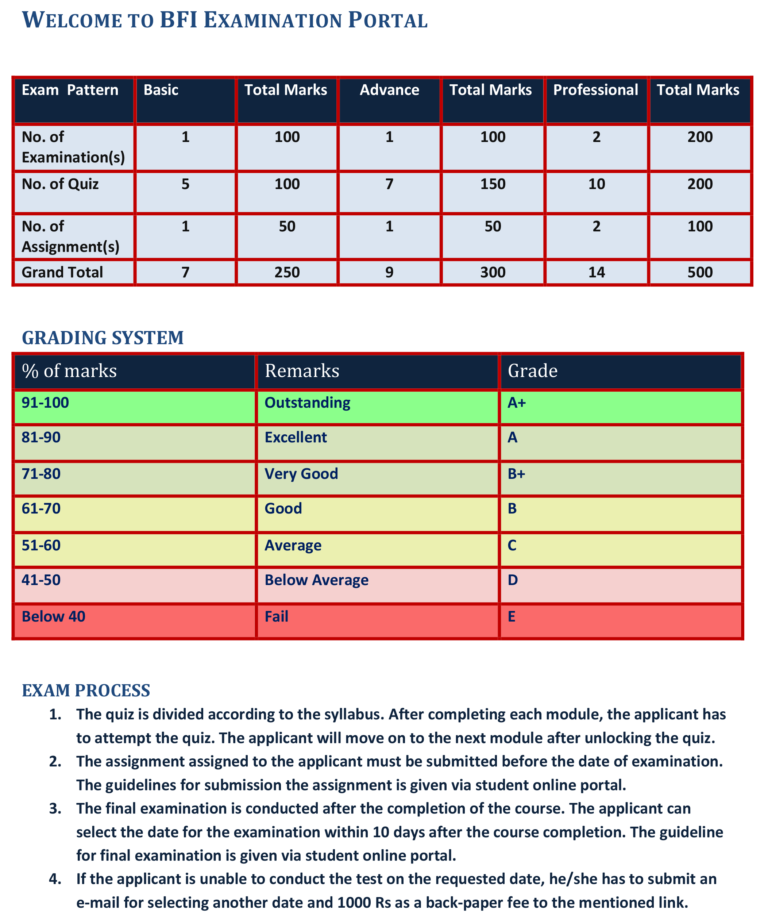
Students must secure minimum qualifying marks in each section to successfully pass the examination and earn certification.
Importance of the Forensic Examination Process
The forensic examination process system at Brilliant Forensic Pvt Ltd is designed to develop industry-ready professionals.
Key Benefits:
- Builds strong investigative and analytical skills
- Enhances accuracy in forensic analysis
- Provides hands-on practical experience
- Prepares students for government and private sector careers
- Develops confidence in handling real forensic cases
This structured and detailed examination process evaluation ensures that students are fully equipped to meet the demands of the forensic science industry.
Conclusion
The examination process at Brilliant Forensic Pvt Ltd is comprehensive, practical-oriented, and industry-focused. By combining theoretical knowledge with hands-on experience and real-world case analysis, it ensures that students are fully prepared for professional challenges in forensic science.If you are looking to build a strong career in forensic science, understanding and preparing for this examination process is the first step toward success